Newsletter Subscribe
Enter your email address below and subscribe to our newsletter

 ByJohn A
Most ethnic jewelry gets worn a handful of times a year and then goes back into storage. The heavy sets belong to weddings and related functions. What gets missed is the daily gap between them, where small Indian earrings quietly do the work that a full bridal set cannot. That gap is where personal style actually lives.
The fix is not more jewelry. It is smaller jewelry that survives a normal day. Small Indian earrings give an outfit a clear cultural signal without asking the rest of the look to step aside, which is why they travel so easily from a cotton kurta to a plain office shirt to a weekend dress.
The Weight That Ends the Evening Early: Large jhumkas and chandbalis pull on the earlobe within a few hours, which is why they get removed before the night is over. The pull is mechanical, not imagined. Weight concentrated on a single piercing stretches soft tissue over time, so the pieces meant for celebration end up avoided even on days that would suit them.
Style That Waits for an Occasion Slowly Disappears: Stylists who dress clients for ordinary weeks routinely see the same pattern: a drawer of expensive ethnic sets, and nothing worn between festivals. The habit hardens. Cultural detail gets filed under special occasions, the daily wardrobe drifts toward whatever is safe, and the connection between heritage and personal dressing gets thinner each season.
Kurtas and Office Wear Ask for Restraint: A cotton kurta already carries pattern and drape, so the earrings only need to echo it, not compete. A small gold-plated stud or a half-inch drop reads as finished. The same pair works under a blazer, which turns it into one of those wardrobe staples you reach for without thinking on a busy morning.
Jeans, Dresses and Casual Layers Take the Contrast Well: Western clothing gives Indian earrings more room, because there is no competing embroidery. A pair of oxidized silver studs against a white shirt or a plain black dress creates contrast that looks deliberate. Accessory trends keep coming back to this idea, so narrow drops suit high necklines while wider shapes sit better with an open collar.
Simple Ethnic Outfits Need a Single Anchor: A plain salwar suit or a solid saree needs one point of interest, not three. Choosing small Indian earrings and skipping the necklace keeps the face bright and the outfit calm. This works well for temple visits, family lunches and office festival days, where full sets would feel out of place.
Studs Win on Wearability and Lose on Movement: Studs sit flat against the lobe, survive phone calls and hair ties, and never catch on a dupatta. That reliability comes with a trade-off: they do not move, so they read quieter from a distance. Jadau or kundan studs solve part of this, since the stone setting itself catches light without adding length.
Petite Drops and Huggies Add Motion at a Small Cost: Drops under one inch give the swing that makes traditional earrings recognizable, without the weight of a full jhumka. Huggie hoops with tiny meenakari work sit close to the ear and stay secure through a busy day. Both need slightly more care around scarves, collars and long hair, though the extra motion is usually worth it.
Polished Gold Reads Festive while Oxidized Silver Reads Casual: Finish decides how loud a small earring looks. Bright gold plating reflects more light and pushes an outfit toward celebration, which suits festive kurtas and evening plans. Oxidized or antique silver absorbs light, so the same shape looks understated enough for a workday. Rose gold sits between the two and flatters warmer skin tones.
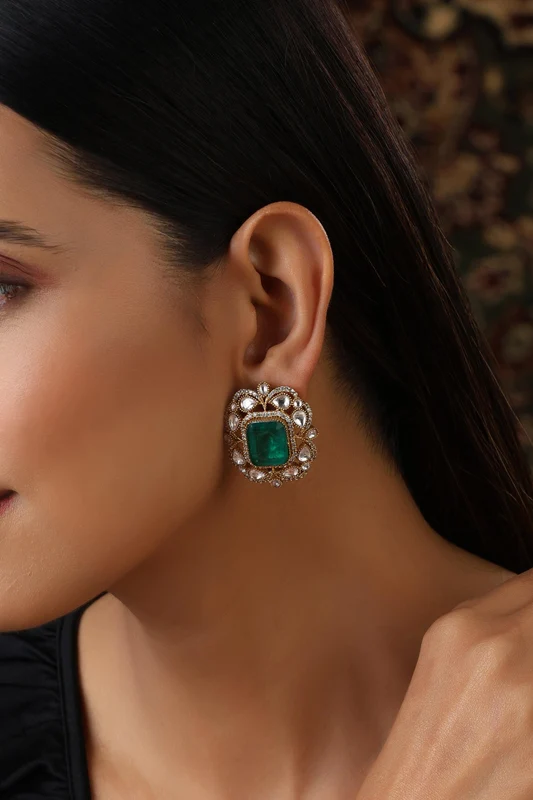
Stone Color Decides Whether the Pair Goes with Everything: Pearl and white American diamond stones behave like neutrals and match most of a wardrobe. Colored stones, ruby red or emerald green, tie the earring to specific outfits and limit repeat wear. For a first pair meant for daily rotation, uncolored stones give more days of use per purchase, which is worth thinking about early.
Less Weight Means Less Damage to Both Ear and Earring: Lighter earrings put less strain on posts, hooks and the piercing itself, so they last through years of daily use. Heavy pieces bend their own findings and loosen stone settings faster. A small pair worn four times a week often outlives a large set that comes out twice a year, and the cost per wear tells the same story.
Simple Care Keeps Plating and Stones Intact: Gold-plated finishes wear thin when they meet perfume, sweat and moisture, so earrings go on last and come off first. Storing each pair in a separate soft pouch prevents scratching. A dry cotton cloth removes oils after wear, and that small habit keeps a plated pair looking new for far longer.
A few practical checks separate small Indian earrings that get worn constantly from the ones that end up in a drawer. Most of it comes down to weight, closure and finish rather than design. Run through these before buying, especially online where scale is hard to judge from a product photo.
See also: AI in Financial Decision Making
The point of a small pair is not compromise. It is access. Cultural style stops being something reserved for three weekends a year and becomes part of an ordinary Tuesday, which is where most of life actually happens. Small Indian earrings make that shift easy, and they cost far less than a full set.
Every season spent waiting for the right occasion is a season of jewelry sitting unused while the daily wardrobe stays plain. A single well-chosen pair changes that within a week. Take a look at the everyday earring range, compare a stud against a petite drop, and start with one pair you can wear tomorrow.